A tiny digital space dedicated to chemistry, curiosity, and fun pink stuff:3
Chemistry Notes
Periodic Table
Chemistry Quiz
Chemistry Notes
Chemistry Notes
Chemistry is the study of matter, its properties, and its composition.
Quick Chemistry Facts!
Atoms are the basic units of matter.
Elements are made of one type of atom.
Chemical reactions form new substances.
Pure Substances!
Matter - Anything that has mass and occupies space.
Pure Substance - Has a fixed composition; includes elements and compounds.
Element - Made of one type of atom; cannot be broken down.
Compound - Made of two or more elements chemically combined.
Mixture - Two or more substances physically combined; can be separated.
Atoms, Molecules, and Ions
1. Electronic Structure of atoms - how electrons are arranged in an atom's energy levels (or shells).
2. Pauli Exclusion Principle - Each orbital can hold 2 electrons with opposite spins
3. Hund's Rule - Electrons fill empty orbitals first before pairing up.
Photo Source: Science Notes
4. Aufbau Principle - electrons fill the lowest energy first.
Photo Source: BYJU's The Learning App
Chemical Bonding
Joining of atoms to form compounds or molecules. Atoms bond to become more stable, usually by completing their outer electron shells.
Types of Chemical Bonds:
1. Ionic Bond - metals + nonmetals = ionic compounds
2. Covalent Bond - nonmetals + nonmetals = molecular compounds
3. Metallic Bond - metals + metals =metallic substance
Periodic Table
Periodic Table
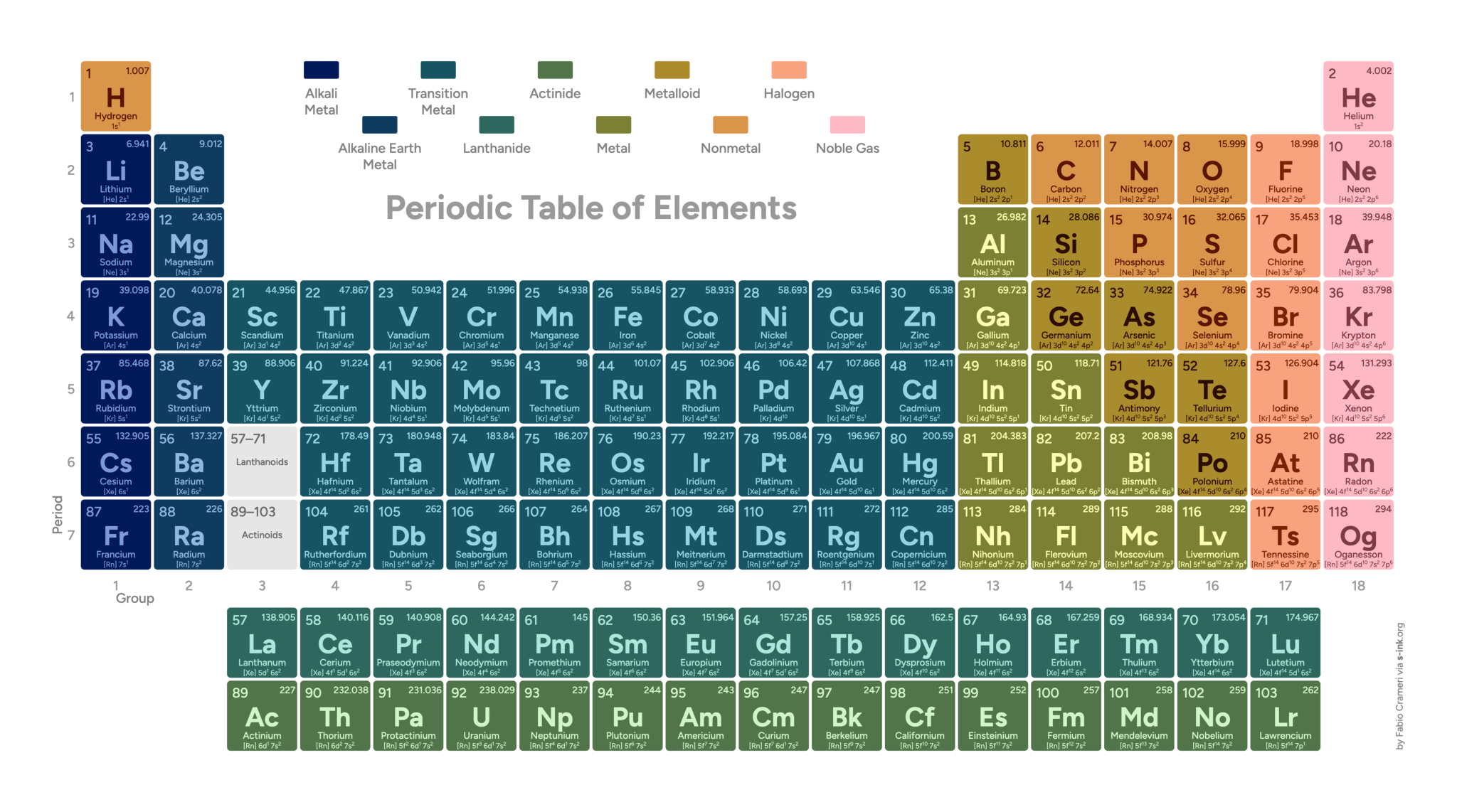
The periodic table organizes elements according to their atomic number and properties.
Here are some of the most common elements!
Hydrogen — H — Atomic Number: 1
Helium — He — Atomic Number: 2
Carbon — C — Atomic Number: 6
Nitrogen — N — Atomic Number: 7
Oxygen — O — Atomic Number: 8
Sodium — Na — Atomic Number: 11
Chlorine — Cl — Atomic Number: 17
Iron — Fe — Atomic Number: 26
Here is the actual Periodic Table!
Photo Source: Fabio Crameri.
Periodicity
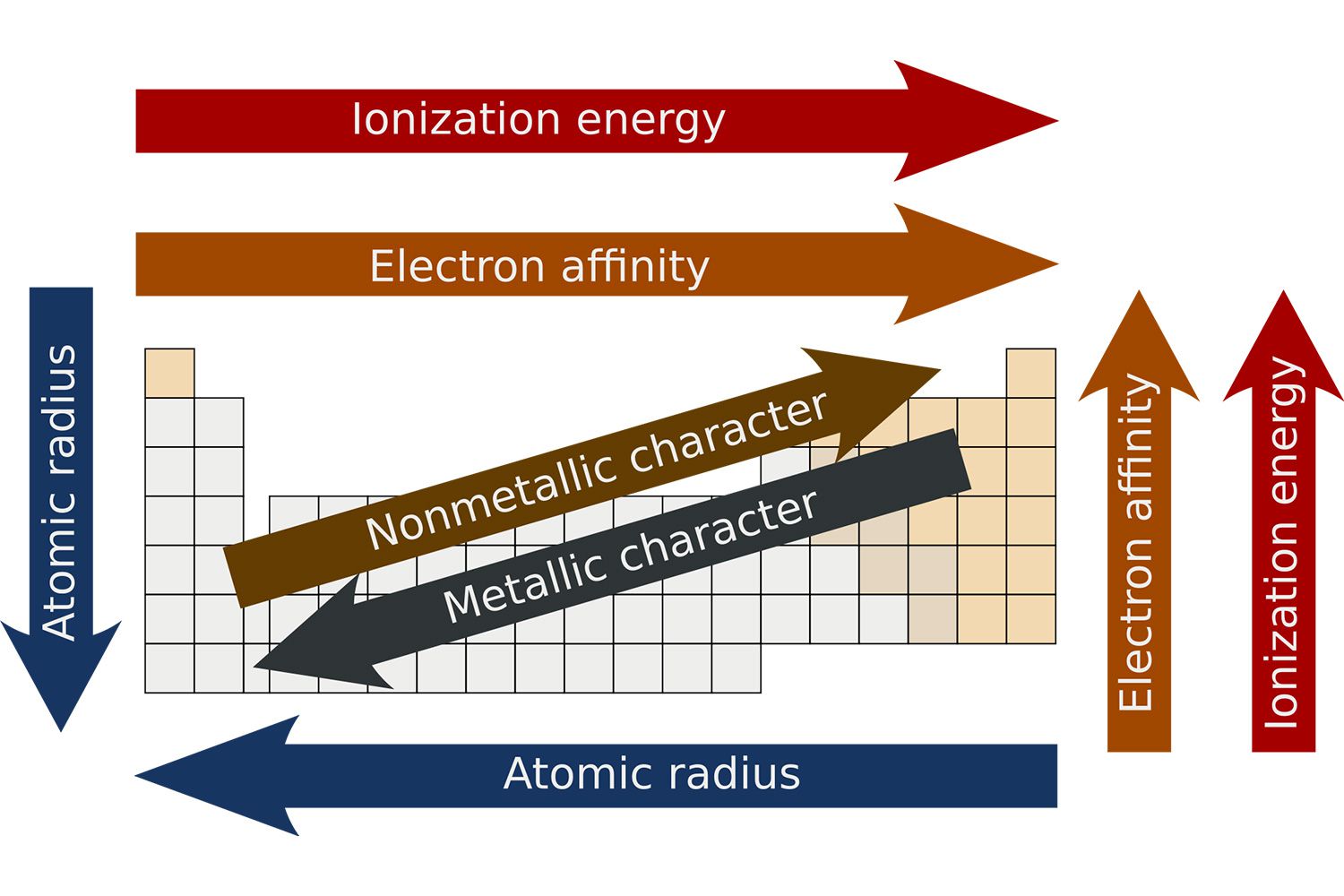
Periodicity is the repeating patterns in properties of elements across the periodic table
1. Atomic Radius (Size of Atom) - Across a period: more protons pull electrons closer (same shell → smaller). Down a group: more shells → atoms get bigger
2. Ionization Energy (energy to remove 1 electron) - More electrons in outer shell = harder to remove. Farther from nucleus = easier to remove
3. Electronegativity (pull on shared electrons) - More protons + almost full outer shell = stronger pull. Bigger atoms = weaker pull
4. Metallic Character - Elements on the left (like Na, K) do this better than the right (like Cl)
Photo Source: Mirek2 / Wikimedia Commons
Periodic Table Groups and Families
Group 1: Alkali Metals - Very reactive, soft metals
Group 2: Alkaline Earth Metals - Reactive, found in rocks
Groups 3-12: Transition Metals - Hard, shiny, good conductors
Group 13: Boron Group - Less Reactive, Mixed types, includes aluminum
Group 14: Carbon Group - Forms many compounds
Group 15: Nitrogen Group - Used in air and fertilizers
Group 16: Oxygen Group - Needed for breathing, includes sulfur
Group 17: Halogens - Very reactive, forms salts
Group 18: Noble Gases - Stable, nonreactive gases
Chemistry Quiz!
Test your amazing chem knowledge! No pressure:3
Question 1 of 5
What is the chemical symbol for oxygen?
Score: 0
Chemistry.exe
Welcome to Chemistry.exe
Status: Ready for some fun chemistry!!
Explore my Laboratory Above!
Those will help you discover elements, molecules, chemical reactions, and interesting scientific concepts! Yippieee.
My Chemistry Resources
These are the useful YouTube Channels and resources for learning chemistry! So skibidi, no cap.
Hi! I'm Ichi, a Grade 12 STEM student who enjoys learning about chemistry, science, and the world around me :3
I aspire to be a Chemist or a Chemical Engineer one day.



 I aspire to be a Chemist or a Chemical Engineer one day.
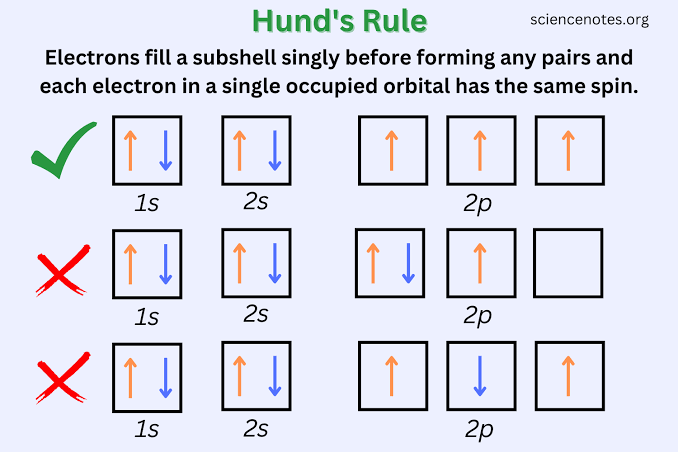 Photo Source: Science Notes
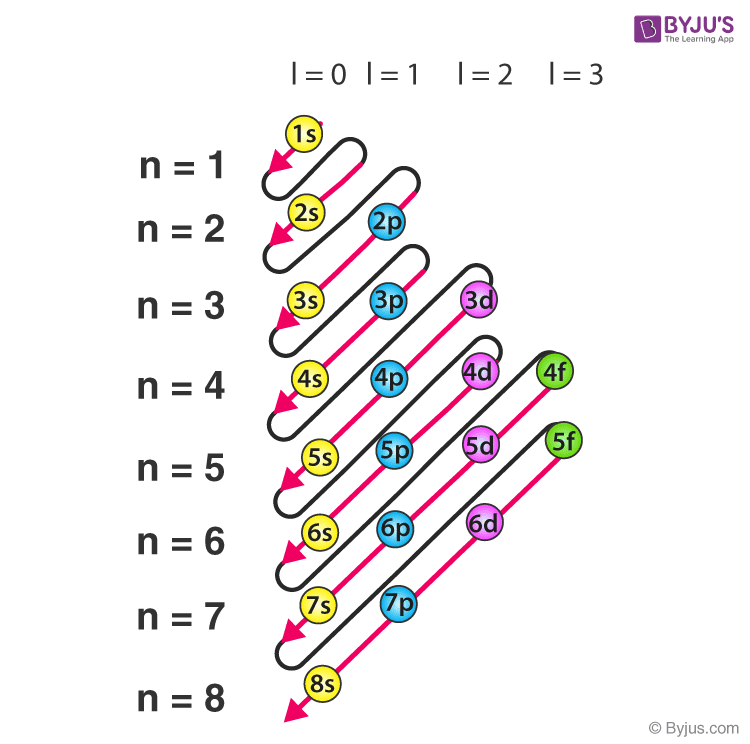 Photo Source: BYJU's The Learning App